

Has your drinks brand forgotten it's in the entertainment business?
The Art & Science of Memorability
"We forget that this is the entertainments industry."
That's Andrew Nash at our Lock-In webinar a couple of weeks ago. It's one of the sharpest lines from the session.
Now Nash isn't saying drinks brands should abandon craft, heritage or premium. He's saying they've forgotten what business they're actually in on top of those things. The entertainment business.
You see, every drinks brief tends to include the same four cues — heritage, craft, premium and where it was made. All useful, all worthy and all what every other brand is doing too. Which is where memorability leaks out.
And that's why the brands that break that mould and entertain on top often get remembered when it matters most, at the shelf.
Stella Artois is a brand that marries both really, really well.
Established in 1366, brewed in Belgium, the chalice glass. Craft, heritage, premium — they don't walk away from any of it, but they let themselves be entertaining on top of it.
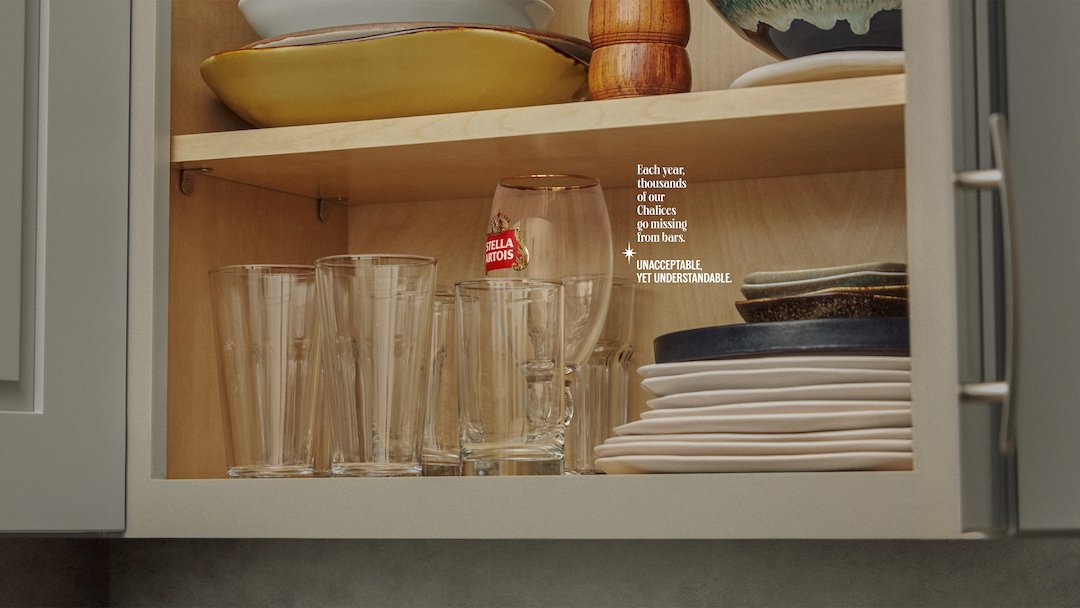
"Unacceptable, yet understandable" — a campaign that celebrates people nicking Stella glasses out of pubs.
"Beer, au naturel" — a cheeky, highly visual marketing campaign championing their Unfiltered lager, a 5% ABV beer taken back to its roots by leaving out the filtration process, resulting in a distinct, natural golden haze.
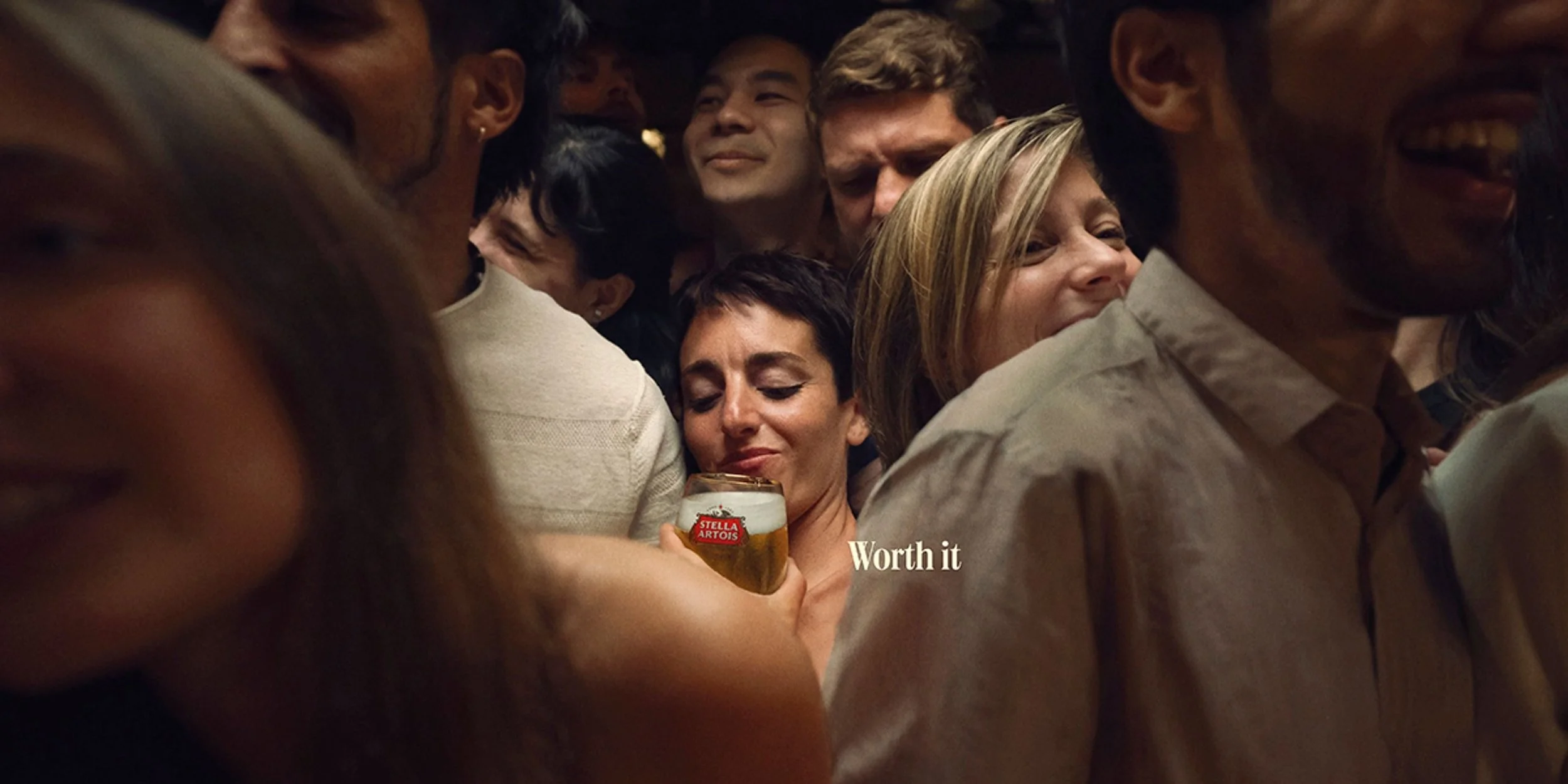
"Claustrobars" — Celebrated the pure joy of getting served when the bar is packed, a human truth we can all relate to.
All entertaining and all still rich with their heritage, craft and brand premium.
Nobody is asking drinks brands to give up their heritage story. Their dedication to craft. The premium nature of their product or where their roots are.
What Nash means, and what Stella Artois prove, is that cliché cues alone don't earn memory. All four plus something worth talking about does.
So look at your next brief. There'll be a heritage line, a craft line, a premium cue, an "our roots" line. All standard and important. But make sure the one thing that could plausibly get a laugh, a share or a mention outside the trade press is also there. The entertainment layer.
That's what gets you remembered when it matters most, at the bar and on the shelf.
Want to know how to bring more of it into your next brief? The Behaviours Agency's free Brand Memorability Hacks playbook is a good place to start. Link below.
That's four moves across four years, in four different registers, with one thing in common. Each one required somebody inside the brand to give themselves permission — permission to do something odd, to be seen with a skate brand, to make a pun the sales team might raise an eyebrow at, to turn a brand quirk into the campaign, to use one of the most famous men on the planet for a laugh rather than for the endorsement. And Stella keeps doing it.
The reason Stella keeps doing it is the reason the drinks category is quietly failing at memorability. Every single drinks brand has the same permission Stella has. Most refuse to take it. It gets filed under risky, or off-brand, or not-in-line-with-the-heritage-guidelines, and the safe answer wins the meeting. Then everyone in the meeting wonders, six months later, why the campaign didn't cut through.
Cutting through isn't a media budget question. It's a permission question.
The brands that get remembered in drinks are the ones that acted like they were in the entertainment business, because they are. The brands that get forgotten are the ones that kept acting like they were in the education business, or the heritage business, or the very-serious-craft business — all of which are the same business, and none of which are the actual one.
Stella isn't proof of a clever idea. It's proof of a brand that keeps saying yes when the safe answer is available. That's the only thing separating memorable drinks brands from forgotten ones.
If your next brief hasn't got a place for something that could plausibly get a laugh, or a share, or a mention outside a category-trade Slack channel, you might want to ask why not.
