

Premium Isn't Over. The Rulebook Is.
Absolut didn't win by being a better vodka.
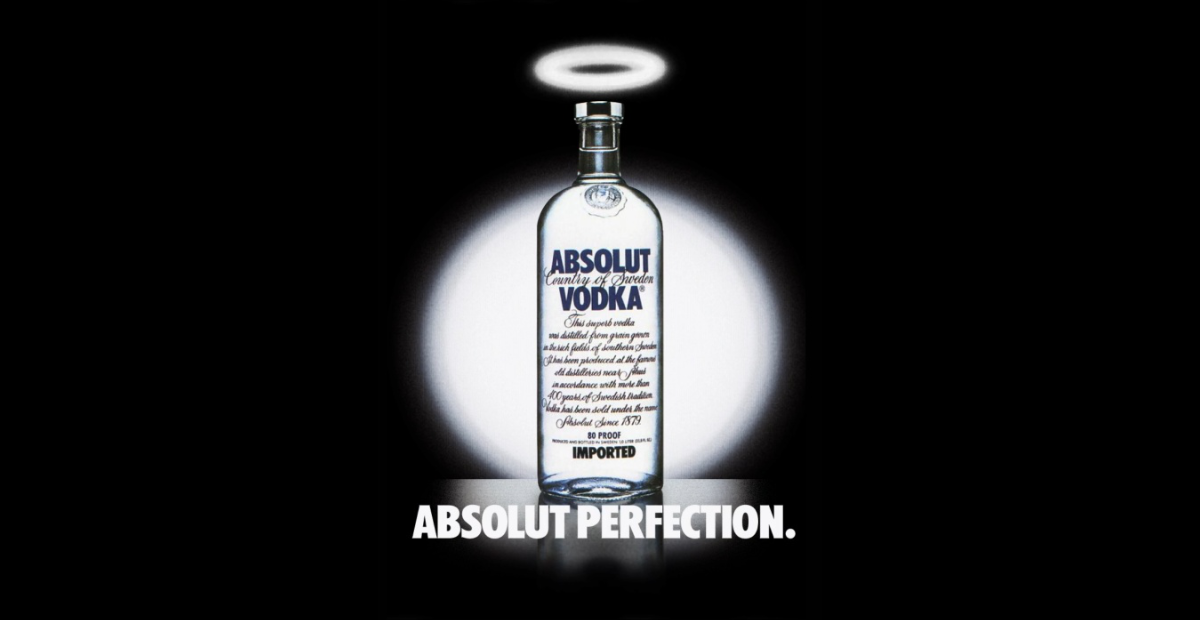
It arrived in America in 1979 with a problem. Every vodka on the shelf was Russian, or told you it was. The heritage game had been played and won long before a Swedish brand turned up in a bottle that looked like it belonged in a chemist's.
So Absolut didn't play. No Russian story, no purity to defend. TBWA put the bottle on a page, called it Absolut Perfection, and did it another 1,500 times over 25 years. By 1985 it was America's best-selling imported vodka.
The rules it ignored were never binding. They just looked that way to everyone obeying them.
Forty-six years on, the trade has spent the summer writing premium's obituary. The Institute of Alcohol Studies has asked whether this is the end of premiumisation. Diageo has launched a cheaper Johnnie Walker and made RTDs a pillar of its turnaround. Pernod Ricard is chasing cans and smaller bottles. Even IWSR suggests much of what the industry called premiumisation was really inflation.
The consensus is describing half a market. In the UK, canned cocktails now make up 27% of a £787 million RTD market, up 64% in a year. Waitrose has a name for it: tinification.

Take MOTH. Canned cocktails, launched in 2021, turnover up 67% last year to £20.9 million, now the number two RTD brand in UK grocery. It sits happily in the supermarket mix-and-match, with no distillery tour or founder's grandfather in sight. And it's premium enough to be poured over ice at £6.50 in every Yo! Sushi in Britain, Selfridges included.
Same trick as Absolut. Different decade.
So why is it happening? Here's what the end-of-premiumisation crowd can't explain. By IWSR's global numbers, a ready-to-drink costs more per serve than wine, beer or spirits, even counting the mixer. And it's the only one of the four still growing.
The drinker isn't trading down. They're refusing to prepay. A £25 bottle is a deposit on a dozen future nights. A can is one evening, paid for on the evening, and it stops when the can does. Premium hasn't gone anywhere. It's been re-billed, per occasion.
Even the incumbents are starting to say so. A senior Pernod Ricard executive, once finance chief of the Absolut Group, now describes the company's growth as occasion-led rather than brand-led. Coming from a brand owner, that's quite a thing to say out loud.
For marketers, that rewrites the rules. Two of them matter most.
Premium is earned in the moment, not on the shelf. It used to be a price and a story big enough to justify the bottle. Now the test is whether what's in the can is as good as the drink at the bar, and whether the brand is there at 5pm on a Friday, when the plan gets made.
Proof beats performance. Drinkers will still pay for provenance they can check. What they've stopped paying for is the manufactured kind: the limited edition that isn't, the ad about somebody's grandfather. The brands winning aren't telling better stories about themselves. They're telling stories that fit somewhere in the drinker's actual week.
I've helped a fair few brands build the old playbook, so I say this with some sympathy: most premium strategies are still written for the shelf. That's habit dressed up as strategy.
Which brings us back to Absolut. Look at Waitrose's list of the brands driving tinification and it's there, selling alongside MOTH, in the same format. Not the bottle TBWA put on a page in 1980, but a range of canned cocktails that includes a Passionfruit Martini, the same drink Waitrose picks out as MOTH's star.
The can even carries the old bottle's silhouette. Absolut kept the one asset it invented and dropped the format it inherited. You could call that following the upstart. I'd call it remembering.
That's the only rule of premium that has ever held. Everything else is habit, and the drinker stopped paying for habit some time ago.
So the question isn't whether premium is over. It's which of your rules you chose, and which ones someone wrote for you forty-six years ago.
At The Behaviours Agency, we build brands worth paying extra for: relevant to the moments that matter to people, and distinctive enough to be remembered in them. If your premium playbook was written for the shelf, we'd enjoy rereading it with you.
