

If your brand walked into a bar, who would it be?
The Art & Science of Memorability
If we think about the brands that have stuck with us over the years, we mean really stuck, the ones we could describe right now without looking anything up, most of them have something we can picture. A character. Something we can see without being shown.
Not a logo or a colour palette or a strapline we have to think twice about. Something we could draw on the back of a napkin.
Most brands in crowded categories don't have that. They look right, sound right and tick every box, but there's nothing distinct enough for people to picture, describe or recognise without seeing the logo. And in a crowded market, that makes being remembered a lot harder.
Orlando Wood's work, drawing on extensive IPA business data, shows that brand characters deliver larger and longer-term business effects than celebrity endorsements. The reason is simple: characters are ownable. Every bit of emotion and storytelling is attributed directly to your brand. A celebrity shares that equity with every other brand they endorse.
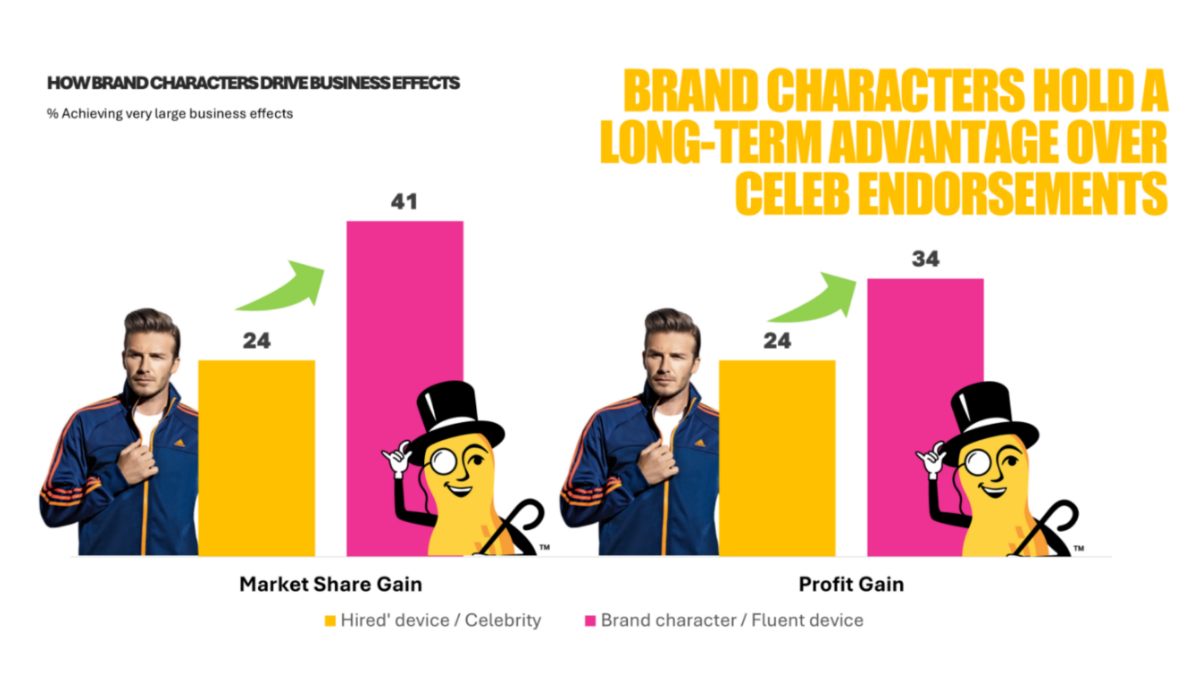
Now imagine your brand had one. A character, a face, a figure with attitude and meaning that shows up everywhere and compounds every time it appears. Something people remember without being told who you are.
The most memorable brands do exactly that and here's what that looks like.
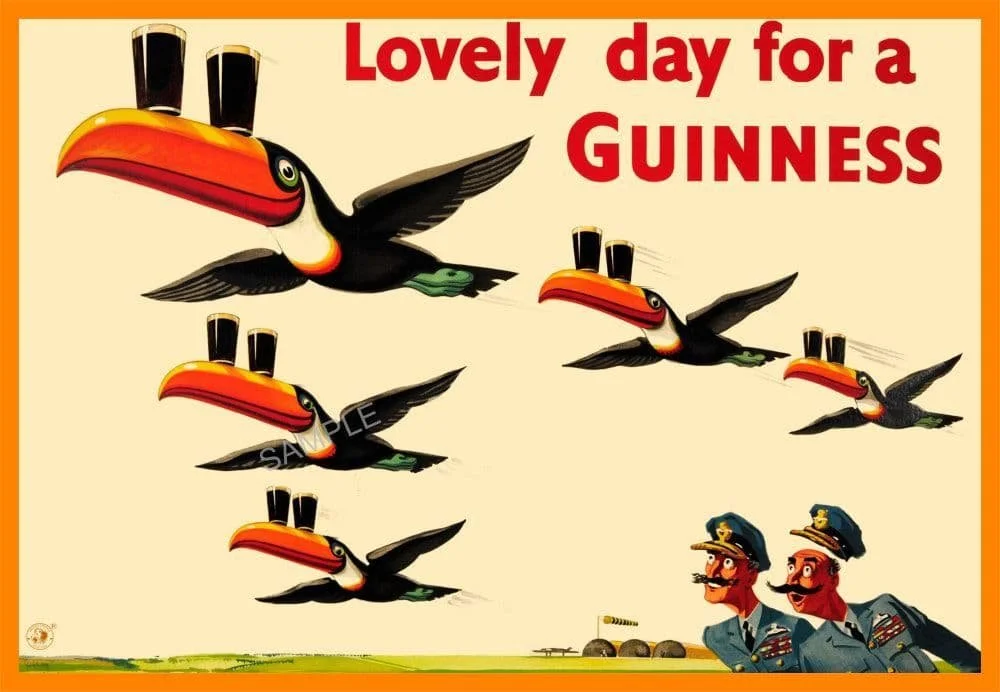
1. The Guinness Toucan.
Guinness was a dark, heavy stout sold on medicinal benefits when the toucan first appeared in 1935. A colourful, surreal character that had nothing to do with the drink. The toucan changed how people felt about the brand. Decades later, toucan merchandise still outsells almost everything else at the Guinness Storehouse. The character outlived every campaign it ever appeared in.
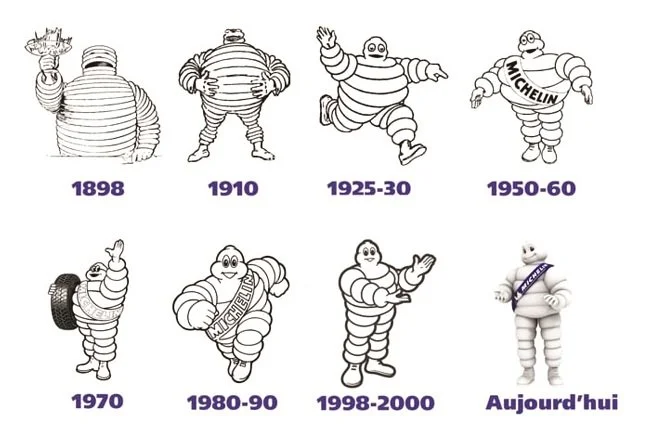
2. The Michelin Man.
A tyre company made one of the most recognised characters on earth out of a stack of tyres. Bibendum first rolled out in 1898 and he's still going, instantly readable in any market, on any forecourt, more than a century later. Nobody needs the Michelin name to know whose he is. That's the power of a character that's truly owned: it stops being decoration and becomes the brand itself.
3. Compare the Market and the meerkats.
A price comparison site in one of the dullest categories going, insurance, built a character so distinctive the brand started bending itself around him. Aleksandr the meerkat arrived in 2009 off the back of a pun nobody asked for, and became the thing people actually remembered in a market where every competitor sounds identical. The character did what the category never could: made a comparison site worth feeling something about.
A toucan, a tyre man, a meerkat. You can picture all three right now without us showing you a single image.
Here's the thing though. For a handful of brands the character is obvious, it's practically built into the name. Captain Morgan has a captain. Some brands are lucky like that. Most aren't. Most don't have a figure waiting in the wings, and that's exactly why this feels harder than it is.
But a character doesn't have to be there already to be yours. It can come from a founder, a feeling, a habit, a phrase, a bit of category truth nobody else has bothered to claim. The brands above didn't all start with an obvious answer either. A stout maker didn't have a toucan. A tyre firm didn't have a man made of tyres. They went looking for one.
So the question isn't "do we already have a character?" It's a better one: if your brand had to walk into that bar as someone, who could it be? What's the figure, the attitude, the face that could only ever belong to you?
If you're not sure where to start, our programs help brands find that answer and build it into an asset that compounds for decades. Not just recognised. Remembered.
