

Why memorability should be your No.1 goal and what that means in practice
The Art & Science of Memorability
It’s was MAD Up North last week.
For the uninitiated, that’s not me describing life inside The Behaviours Agency (though, fair).
It’s the two-day festival of marketing thinking hosted at Aviva Studios, Factory International. A brilliant mix of inspiration, provocation and hard commercial reality.
Yes, AI had its airtime.
But what truly dominated?
Human creativity. Cultural relevance. And the role both play in driving growth.
This is not creativity for creativity’s sake. Creativity counted by effectiveness.
This will be music to your ears if your FD is currently scrutinising every line of your marketing budget.
Because right now, spend has never been under more pressure.
Growth is harder. Scrutiny is sharper. Marketing can feel like an uphill trudge.
Which brings us to memorability.
Where Creativity Meets Effectiveness
We believe the intersection of creativity and effectiveness lives in one place:
Memorability.
In the moment of need. In the moment of impulse. In the split second of consideration.
Does your brand come to mind?
And when it does, is it easy to buy?
That’s the link between mental availability and physical availability. You need both. The evidence is compelling.
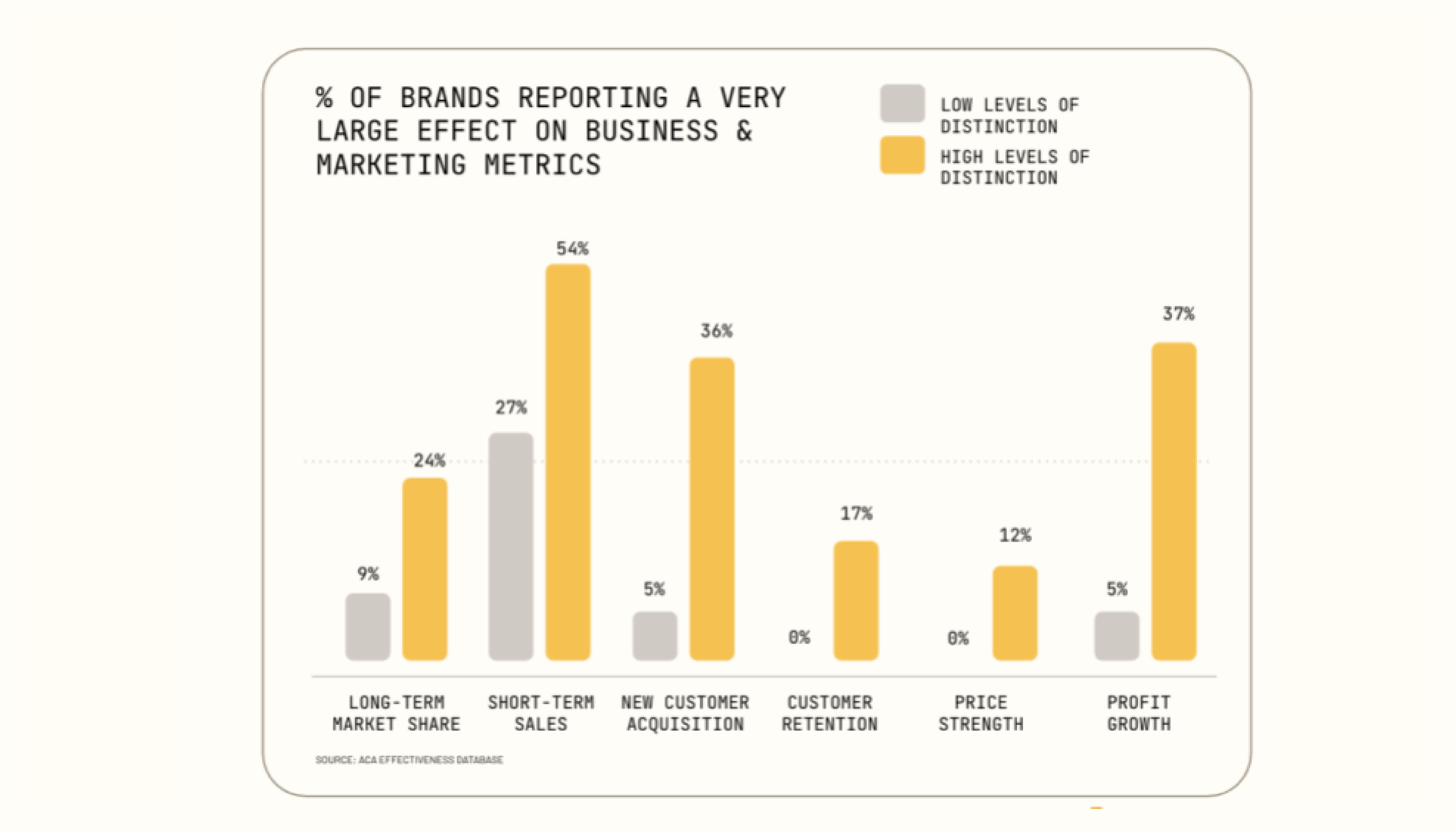
Campaigns that are seen as highly distinctive — a core driver of memorability — significantly outperform those that aren’t.
Distinctive campaigns drive:
54% short-term sales uplift vs 27% for non-distinctive work
36% new customer acquisition vs 5%
25% market share growth vs 9%
37% profit growth vs 5%
Even pricing power improves
But Memorability Alone Isn’t Enough
Here’s the nuance.
Memorability only works when motivation exists.
You cannot make a brand memorable for memorable’s sake.
The example I often use is Crazy Frog.
Incredibly memorable. Instantly recognisable.
But unless you’re under 10, the motivation to hit play on the Crazy Frog song is low.
And without motivation, there is no behaviour change.
Behavioural science consistently shows that action only happens when sufficient motivation is present. Research suggests up to 95% of purchasing decisions are subconscious — driven more by emotional motivation than rational evaluation.
So effectiveness requires both:
Salience (memory structures)
Motivation (emotional drivers)
Miss one, and growth stalls.
Our Framework for Building Memorable Growth
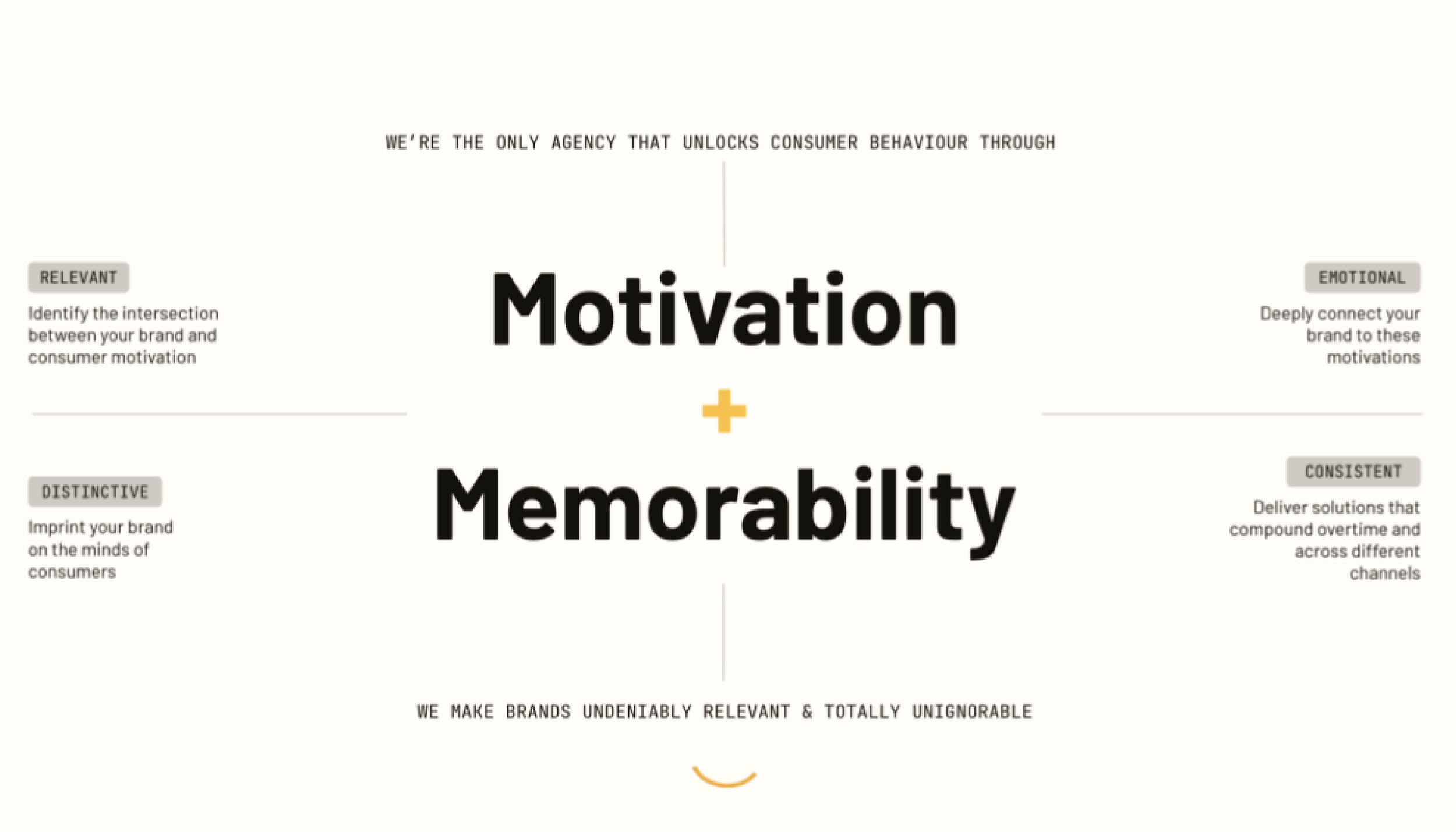
This is why our approach centres around four principles:
1. Relevance
Find the intersection between your brand and real human motivation.
2. Emotion
Deeply connect your brand to those motivations.
3. Distinctiveness
Imprint your brand into memory structures.
4. Consistency
Compound those memory structures over time, across touchpoints.
Memorability isn’t a campaign trick.
It’s a system.
The Commercial Reality
If your brand is easy to miss, you are easy to replace.
And if your competitor outscores you on memorability, they will win disproportionate growth.
Simple as that.
Over the coming weeks in this Art & Science of Memorability series, we’ll:
Unpack more of the evidence
Share inspiration from brands doing it well
Break down methodologies we’ve used with brands like Sharps Furniture, AO.com and Yankee Candle
Show how to build memorability deliberately — not accidentally
Because in a squeezed market, the brands that grow aren’t just seen.
They’re remembered. And remembered brands get bought.
Feeling like your brand just isn’t memorable?
Maybe it’s in need of a refresh to make it relevant, distinctive, emotive and consistent in order to cut through the noise.
Want to know more?
See our Brand Renovation program.
