

Is “How do you eat yours?” the greatest brand-building idea ever?
The Art & Science of Memorability
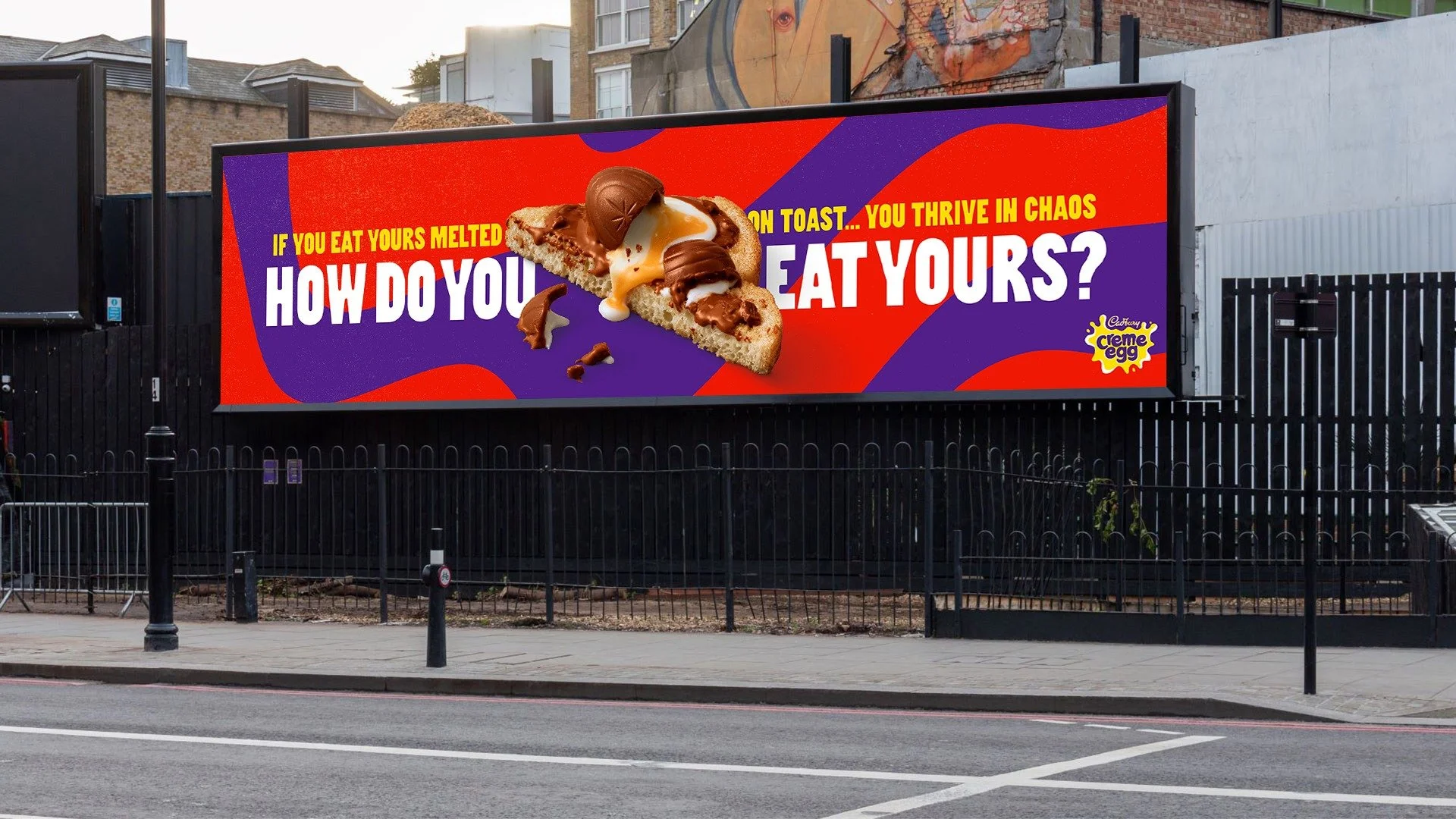
Every Easter, I turn a little purple with envy.
Actually, not Easter.
Ad-land Easter — which, as we all know, starts sometime in February.
Why the envy?
Because every time I see those simple words — “How do you eat yours?” — I have the same thought:
I wish I’d made that.
Then I remember… I was three when it was hatched (sorry) by Boase Massimi Pollitt in 1985.
And yet, every Easter it comes back.
And every Easter, it reminds me just how good it is.
Not just a great campaign.
Arguably one of the greatest brand-building platforms ever.
What makes it so good
Early in my career, the industry obsessed over “big ideas.”
Twenty years on, I’ve come to a different definition:
A big idea isn’t big because it’s loud.
It’s big because it lasts.
The best ideas are:
Simple
True
Endlessly renewable
They’re rich. They keep giving.
And that’s exactly what this is.
It takes a slightly negative product truth —
it’s a bit messy to eat —
and flips it into a positive human one:
The way you eat it is what makes it fun.
From there, it builds into something more powerful:
A behavioural idea rooted in the moment of consumption.
One that invites participation.
One that signals identity.
One that opens up infinite creative territory.
40 years of play
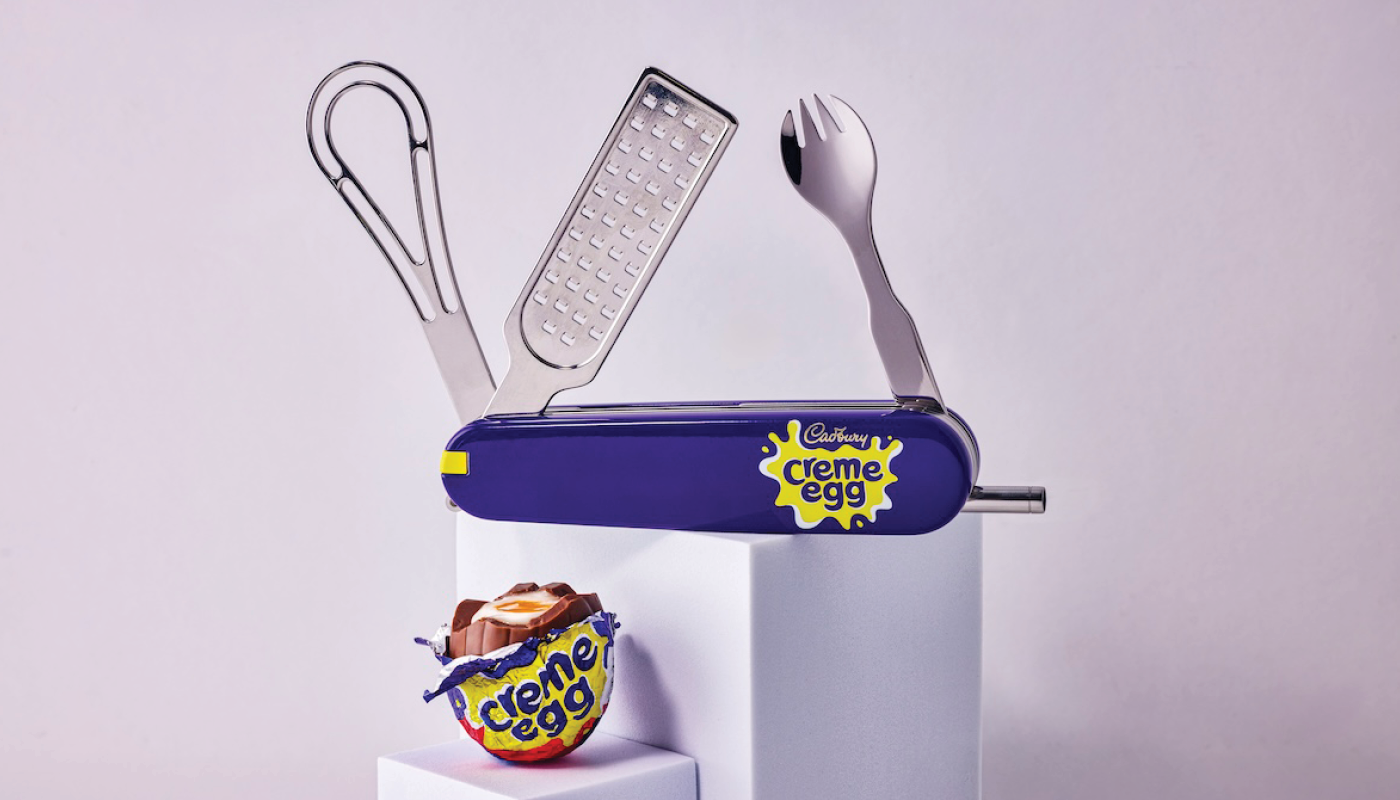
This Easter, they’ve launched the GooTool —
a limited-edition multi-tool built entirely around the same question they’ve been asking since the 80s.
A spork. A whisk. Tweezers.
One for every way you eat yours.
It’s playful. Slightly ridiculous. Totally on-brand.
And it’s just the latest expression of a platform that’s been reinterpreted again and again — often leaning into the surreal.
Some classics:
“There’s not many days left to eat your Cadbury’s Creme Eggs”
Zodiac star signs
Matt Lucas: “I see the future… and it’s egg-shaped”
Different executions. Same idea.
The science behind the art
If you chart Creme Egg over time, the platform hasn’t been continuous.
There was a period where Cadbury moved away — leaning into the product’s “gooey” spectacle.
But its return in 2020 tells you everything:
Great ideas don’t disappear.
They wait.
And there’s science behind why this works.
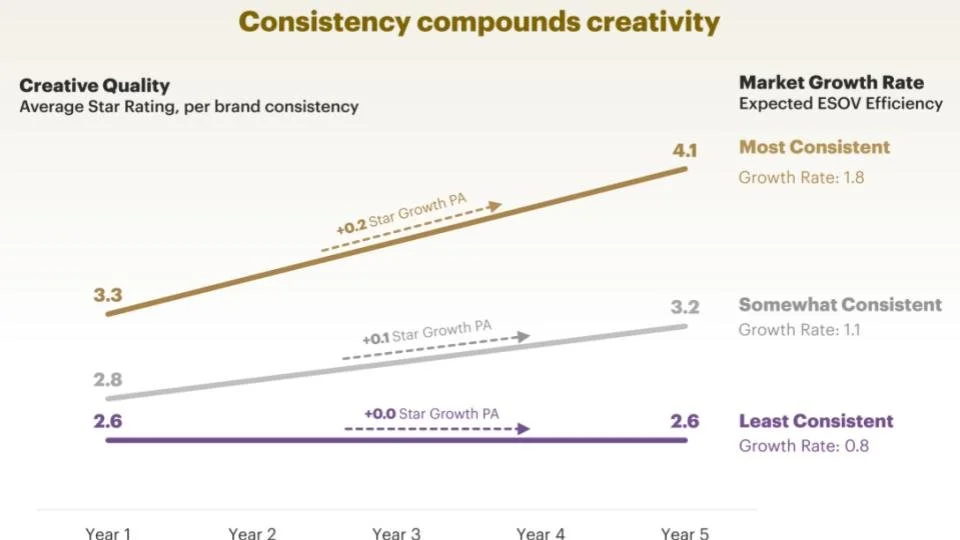
Research from System1 — particularly Andrew Tindall’s work on compound creativity — shows: There’s no such thing as wear-out. Only wear-in.
The more consistently an idea is executed, the more effective it becomes.
Or, as we put it at The Behaviours Agency:
The more consistent the idea,
the more memorable the brand.
Why richness matters
For an idea to compound, it needs to stretch:
Consistency over time
Can it run for years without losing meaning?Consistency across channels
Can it live everywhere — from advertising to in-store to product?
“How do you eat yours?” does both.
Effortlessly.
So… how do you eat yours?
Happy Easter.
The Behaviours Agency is currently developing big, memorable ideas for brands in FMCG, home and travel.
Our Create Fame programme builds consistent brand platforms that compound into the growth you’ve been expecting.
