

Sale now on. Prices slashed. Boxing Day sale. And the dreaded Black Friday promotions!
We get it. The temptation for brand promotions is like trying not to eat that last piece of christmas cake at the party. You know you don’t want to. You know you shouldn’t, you know it’s the added calories you could do without, but the little voice of impulse inside says ‘go on then!’.
Now swap the christmas cake for stock that’s not quite shifted. Black Friday’s coming up and everyone around you is always on sale. You know you don’t want to. You know it’s bad for you. There’s that little voice again: ‘go on then!’ And you hit sale anyway.
Of course, eating christmas cake and brand promotions are two different scenarios, but the one thing they have in common is: you know it’s bad. You know you don’t want to, but you do it anyway. It’s bad for you, and the truth is it’s bad for brand.
Don’t believe us?
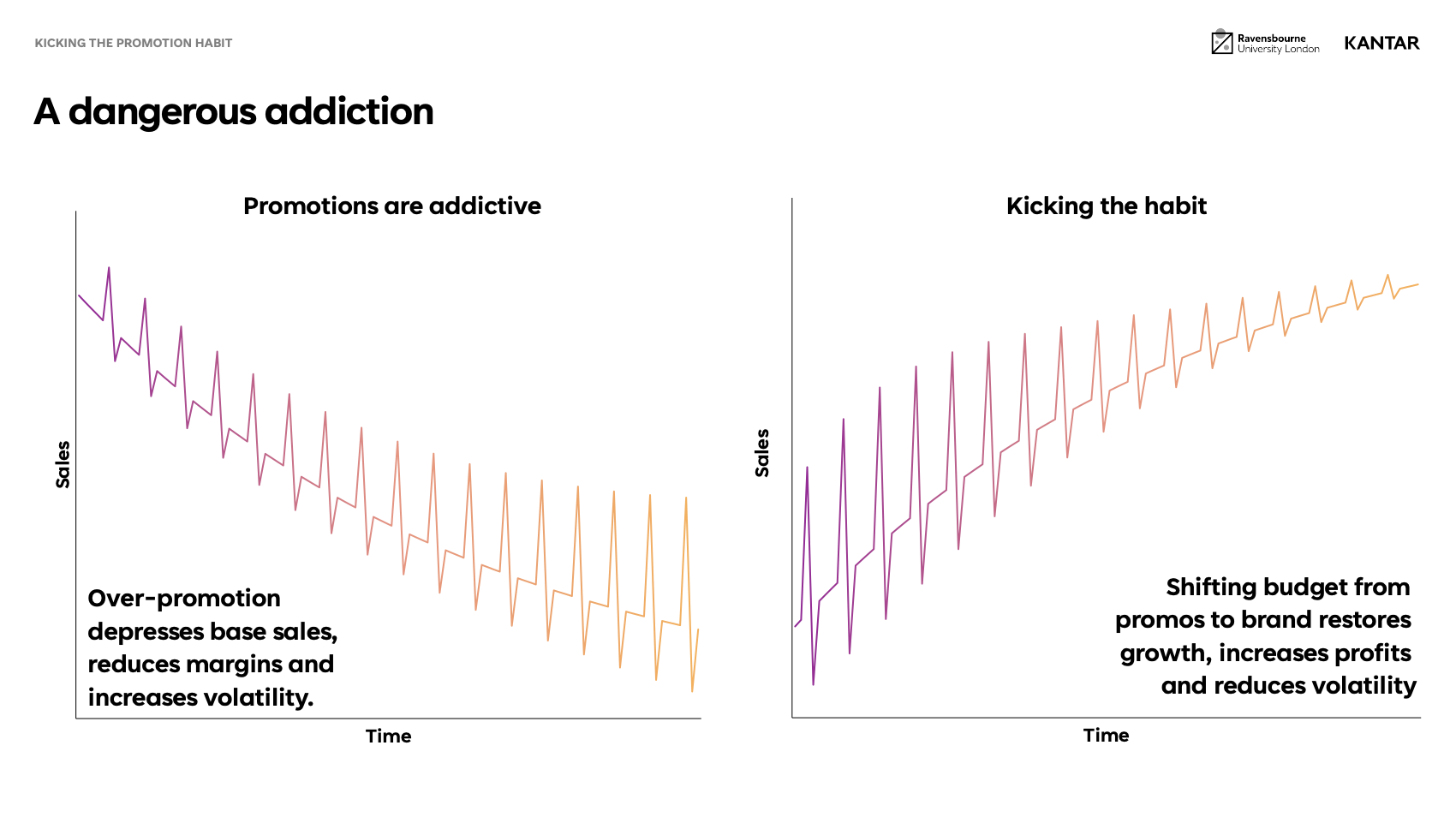
At the IPA Effectiveness Conference from this past October, Les Binet and Kantar’s Dom Boyd presented a case against the industry’s promotion addiction. The title slide alone read: ‘The price promotions habit destroys profits. So why keep doing them?’
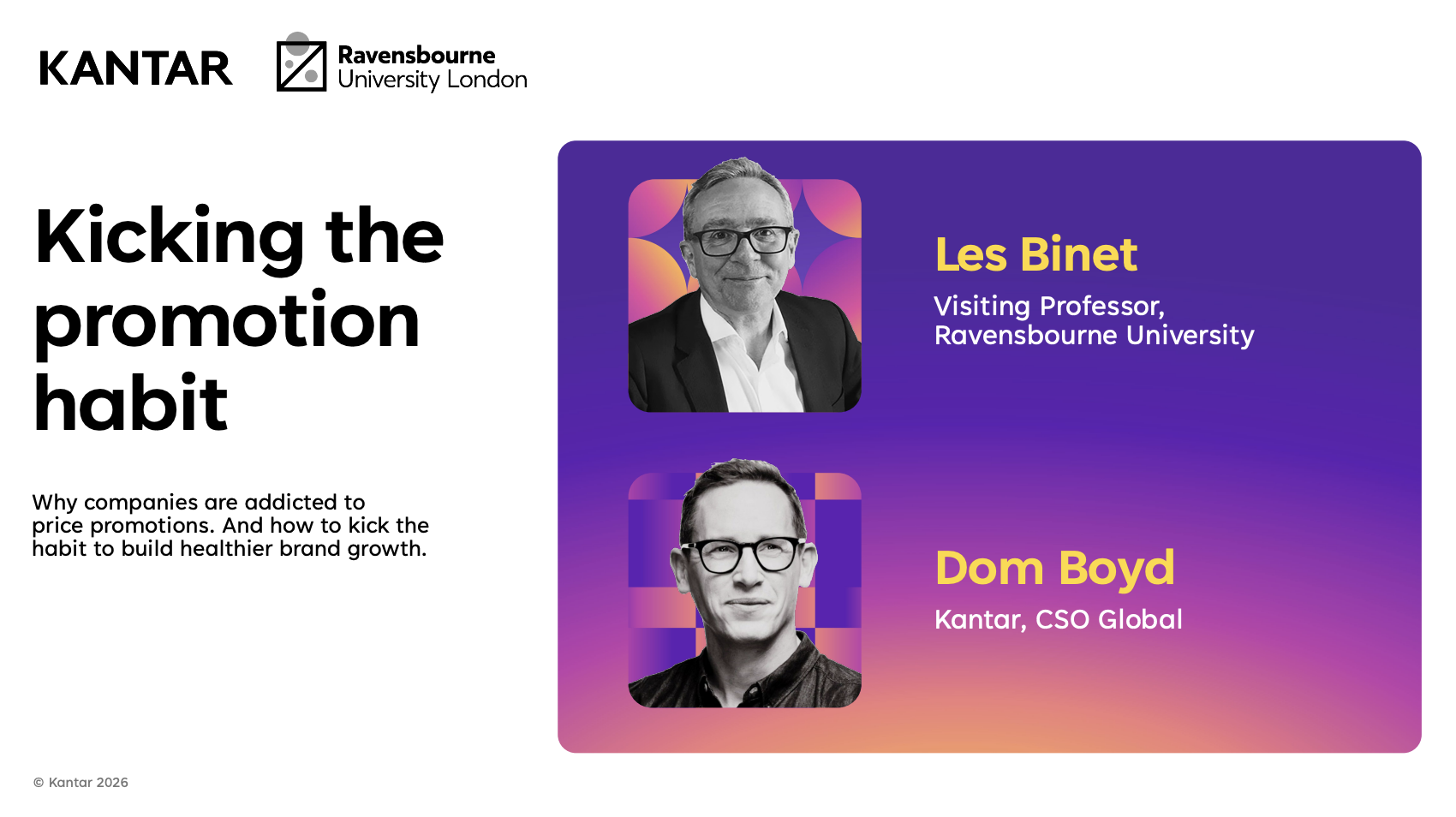
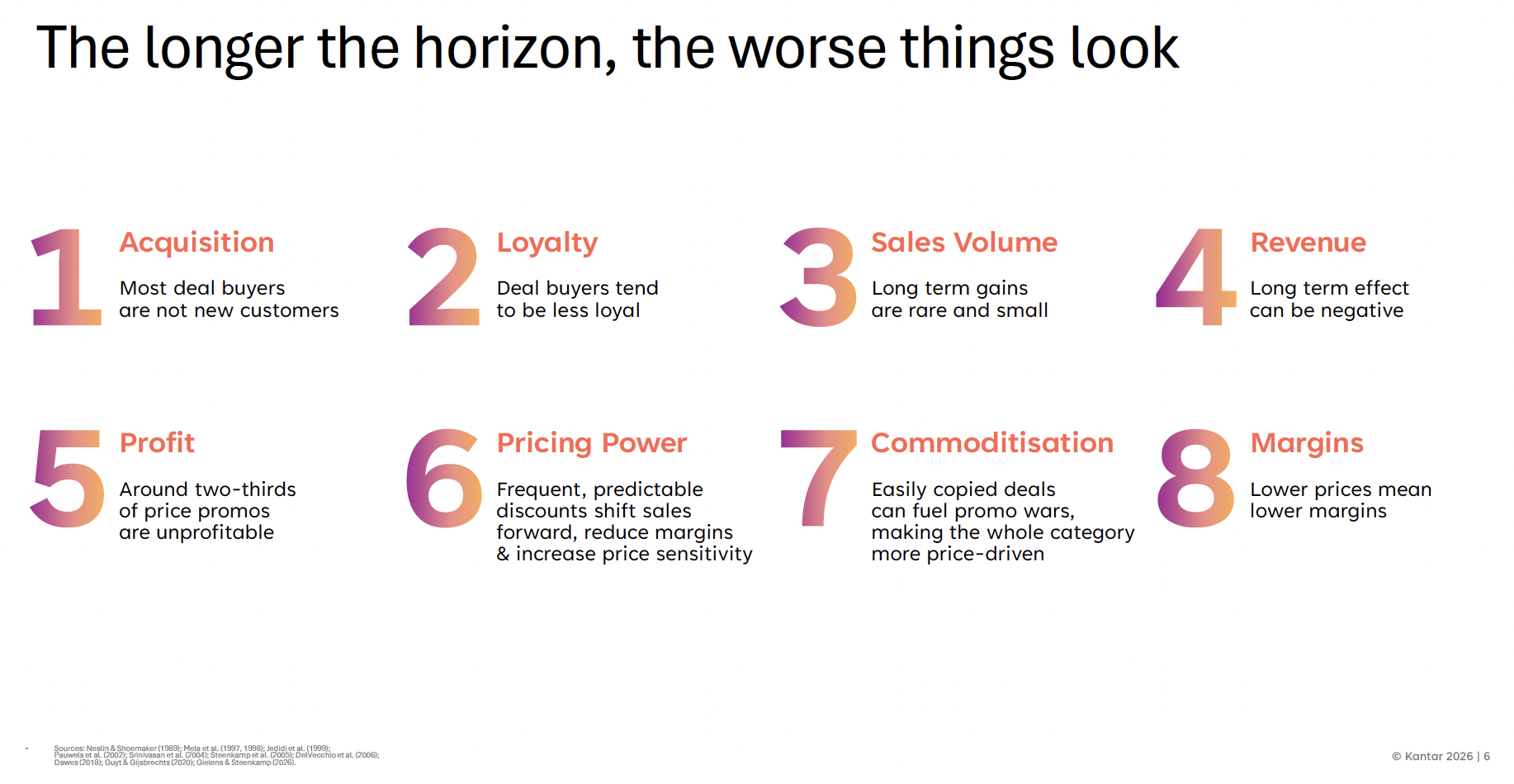
As Binet himself put it, ‘Price promotions are like class A drugs: expensive, dangerous and addictive.’
They’d surveyed the people who sign off on promotions. And like that last slice of christmas cake, they know it’s bad for them.
Four in five agree many of the shoppers buying on deal would have bought anyway. That’s a discount handed to someone already reaching for their wallet.
Three in four agree repeated promotions make shoppers more price sensitive. So every sale makes the next one harder to say no to.
Three in four can’t even estimate what proportion of their promotions are profitable.
Yet the second most common reason for their last promotion was clearing stock that hadn’t shifted. 17%.
Just like that last slice of christmas cake, knowing it’s bad hasn’t stopped anyone. Because while you might shift some stock, the shoppers you’ve discounted don’t come for the brand. They come for the low price, and the low price is what they’ll come back for.
So what does this mean for the brands in the promotion mix?
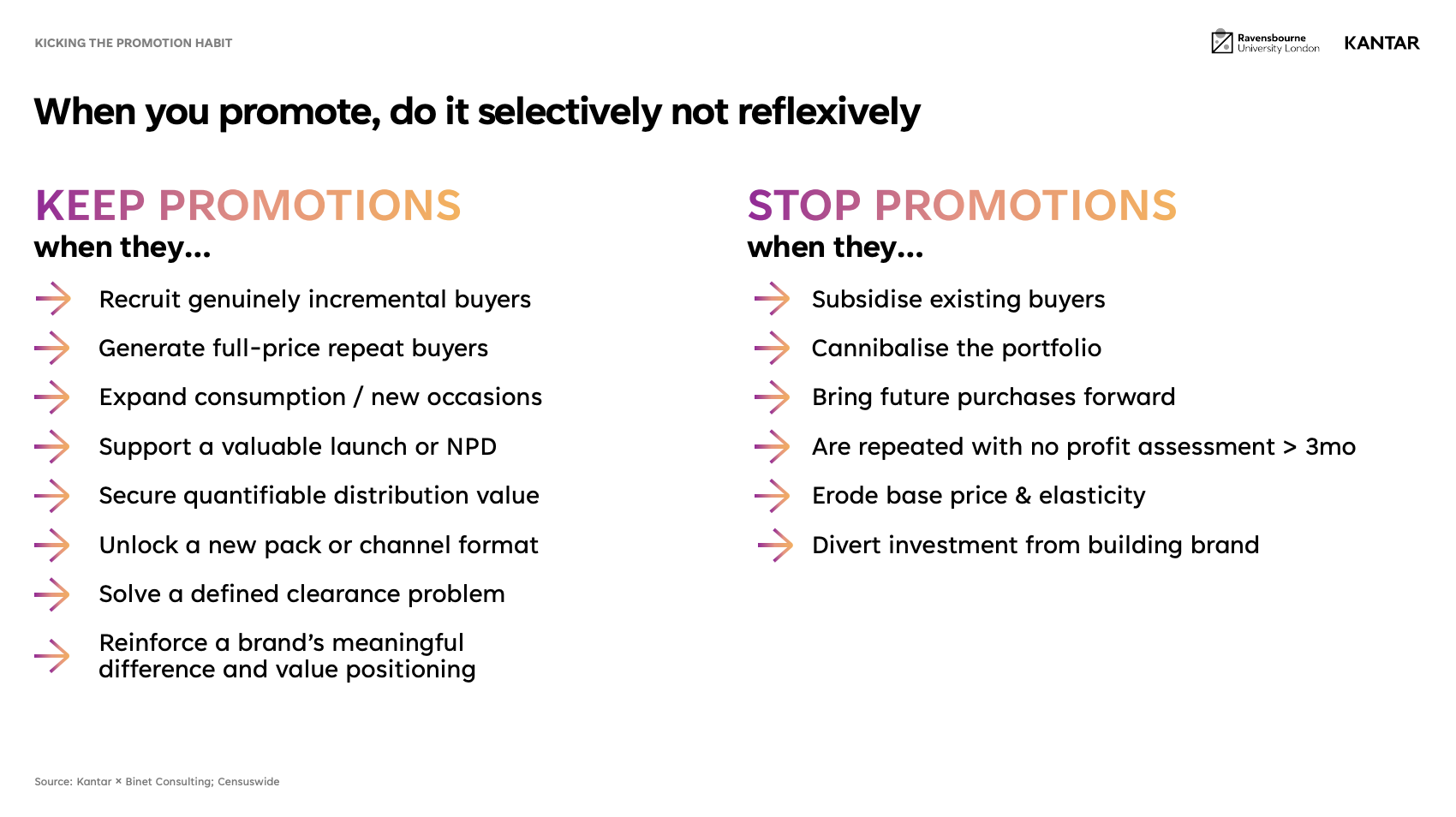
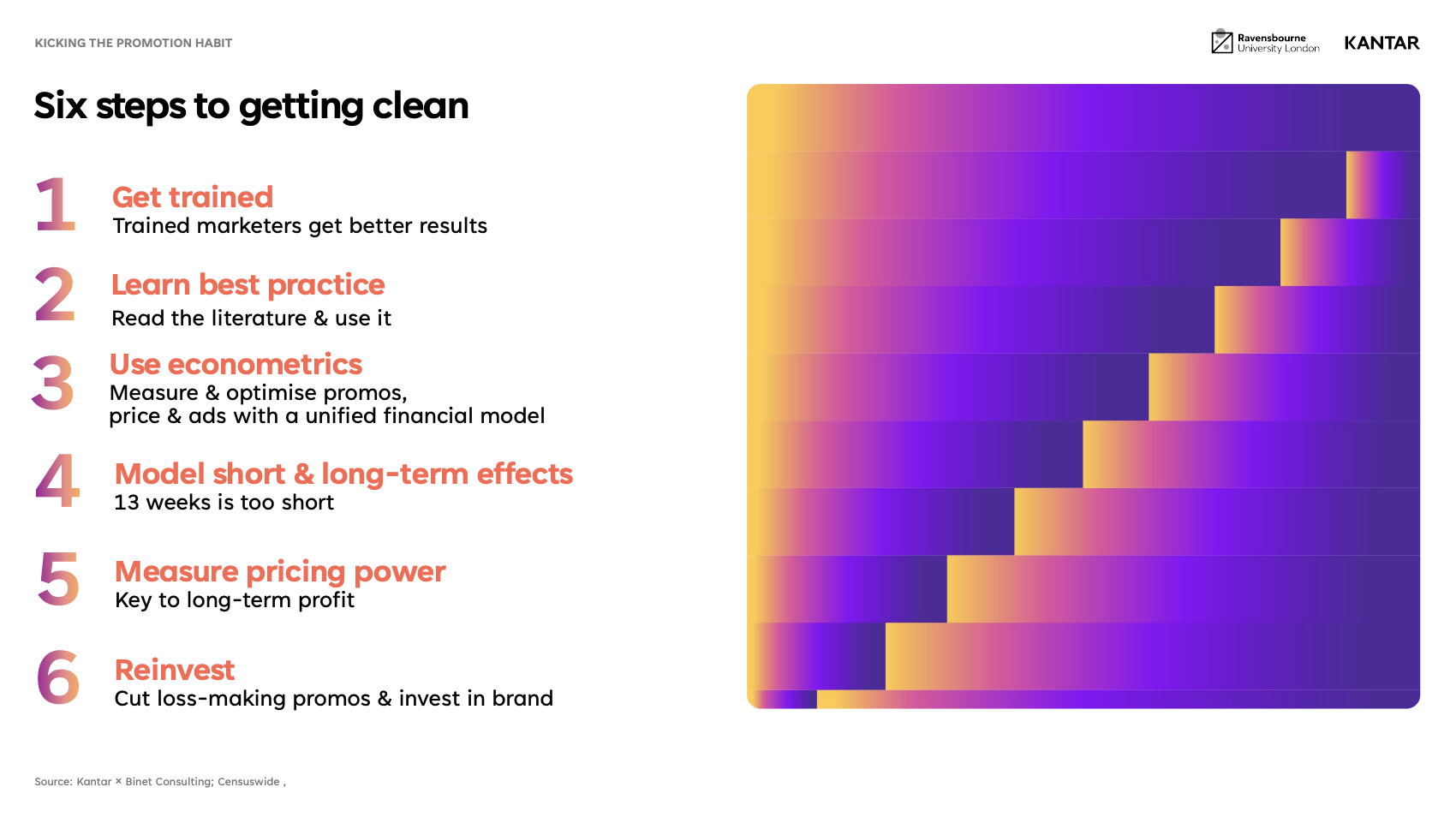
Binet and Boyd’s advice is to promote selectively, not reflexively.
Keep promotions when they recruit genuinely new buyers, generate full-price repeat, expand into new occasions, or reinforce what makes the brand worth paying for.
Stop when they subsidise people who were already buying, cannibalise your own portfolio, pull tomorrow’s sales into today, or divert the budget that should be building brand.
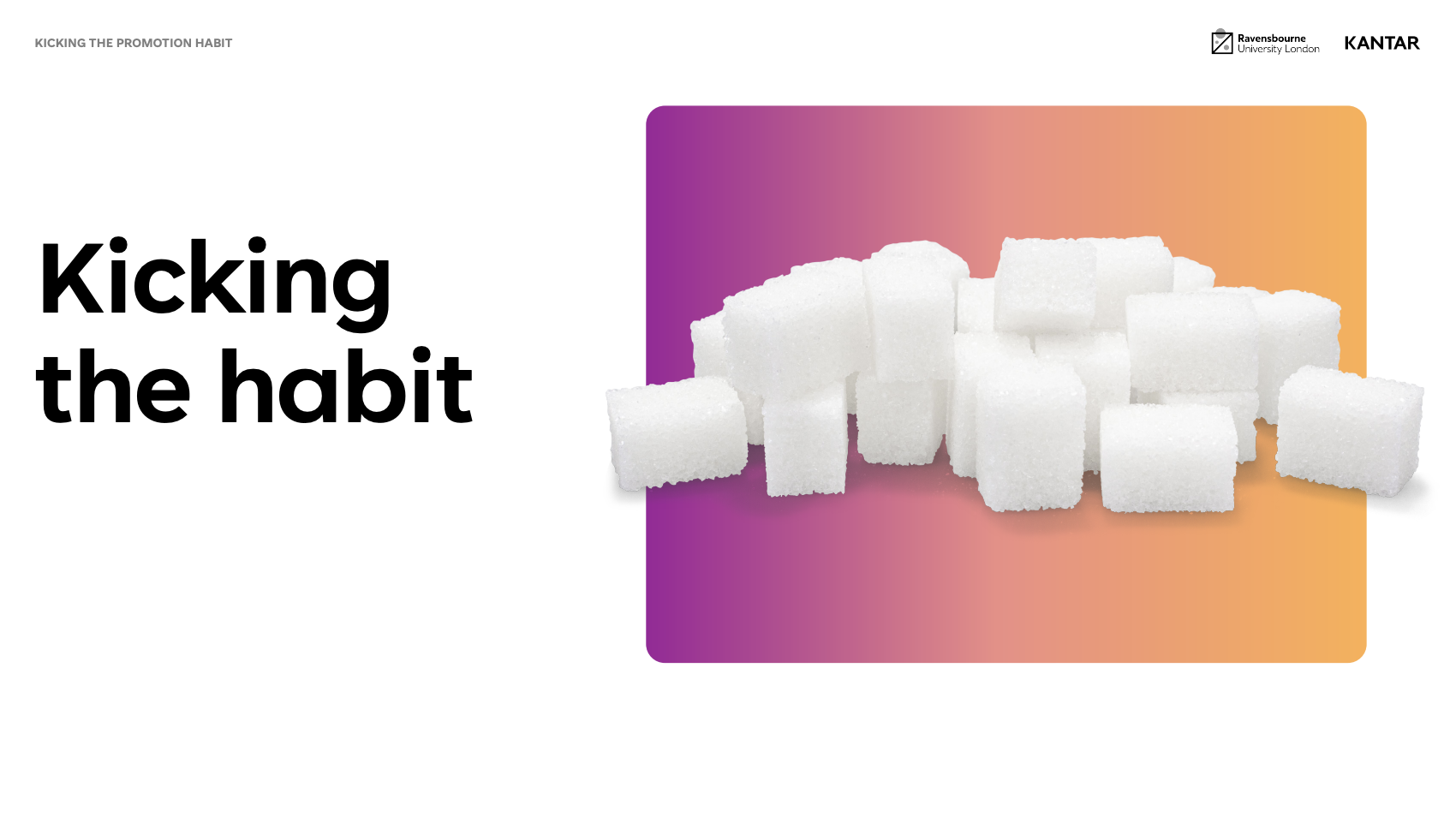
So when the temptation to hit promotion comes around again, and it will, just like that last slice of christmas cake at the party, ask yourself: are they buying the brand or just buying the bargain? Because the shopper who only shows up when the price drops isn’t a customer. They’re a habit you’re paying for. And habits, unlike brands, are easy to forget.
At The Behaviours Agency, we spend our days helping brands fight forgettable. Making them more memorable, undeniably relevant, and totally un-ignorable. If you’ve got a big moment on the horizon or want to stop the cravings for promotion, let’s talk.
