

One of the biggest surprises of my life came when I was 10. It left me sleepless for weeks.
All my mates had been talking about Ridley Scott’s 1979 classic Alien. They’d all watched it, I hadn’t, and I just had to. So I got my hands on the equivalent of today’s dodgy fire stick: a VHS recorded off the telly. I popped it in late one night, and it was single-handedly one of the biggest regrets of my 10-year-old life. I never did have the courage to tell my mum and dad why until I was in my late teens.
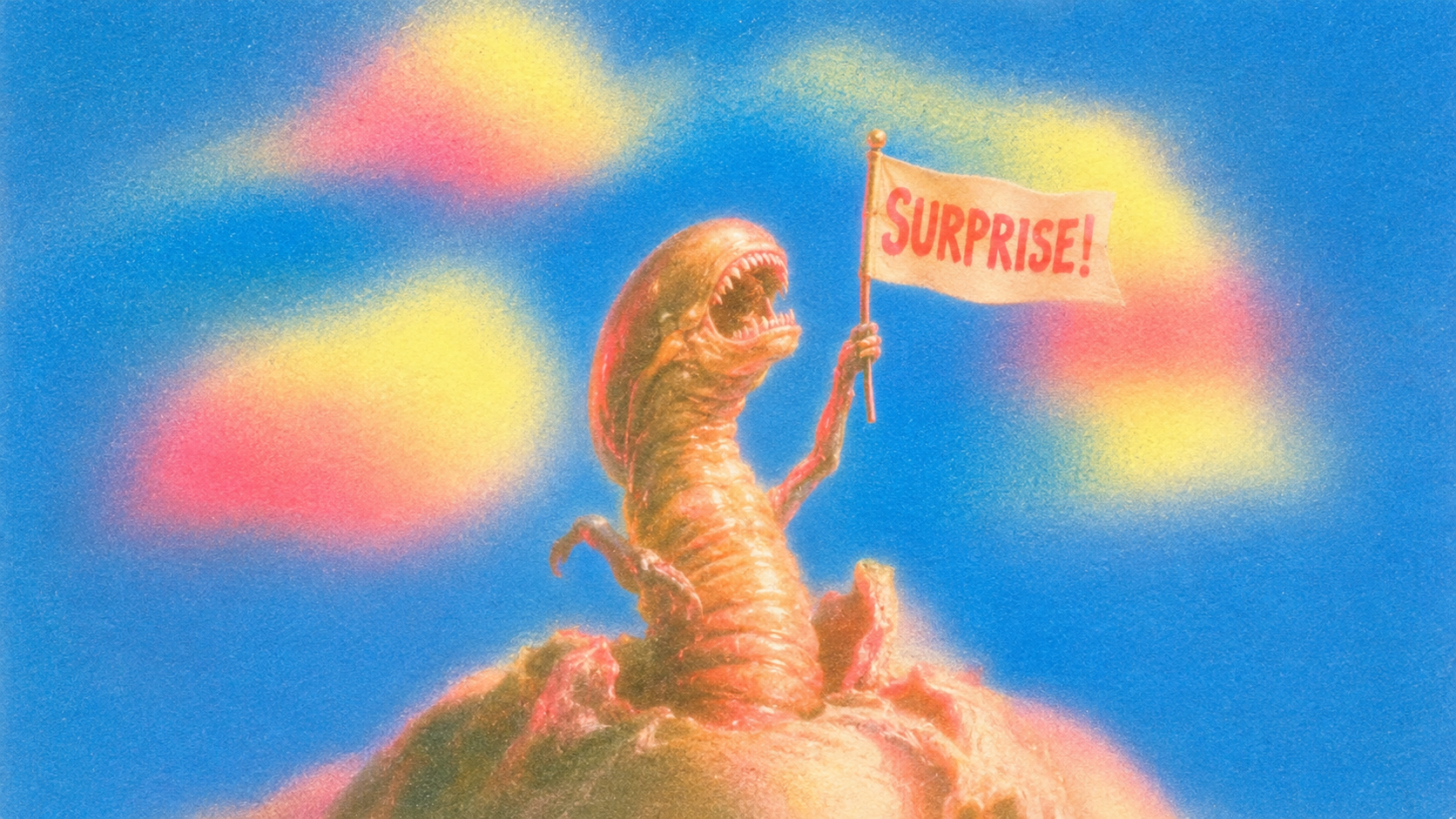
The one scene that surprised the life out of me was the iconic chestburster. If you haven’t seen it, here’s how it goes:
The crew of the ship Nostromo sit down for a spot of dinner together. Laughs, food and conversation are in full flow. Then next minute all hell breaks loose. Kane, played by actor John Hurt, starts choking, convulsing, clutching at his chest. His shirt goes red, then tears, and out of nowhere a small, bloody alien creature bursts through, a fist-sized head with a mouth full of teeth, shrieking before it scurries off into the ship. Earlier he’d been attacked by a creature and seemed to have recovered.
The rest of the crew are left stunned, covered in blood and surprised. And the surprise was real. You see, director Ridley Scott wanted real reactions, so he gave the actors less when describing what was to come. In the script it was one line: “This thing emerges.” Nobody had warned the actors of the blood, gore and surprise that was to be unleashed.
You might be left wondering what on earth Ridley Scott’s science fiction horror scene has to do with brands. It’s the power of surprise. Just not the kind that keeps you awake at night.
We see it like this: done right, surprise has the power to get brands remembered. Not forgotten in a flash.
Don’t take it from a 10-year-old with a VHS. The brain is a prediction machine. It spends the day guessing what happens next, because that’s how it keeps you safe. When something turns up that it didn’t predict, it stops everything to work out if it’s a threat, and it files it as worth remembering.
Still not convinced? Adam Morgan of eatbigfish and Jon Evans, host of the Uncensored CMO podcast, presented the research at Cannes Lions. It’s now a webinar: The Startling Power of Surprise. WATCH HERE
Most brands do the opposite. Same look, same tone, same promise, delivered right on schedule. People look straight past them, on the shelf, on the street, on the feed. They might stop now and again, but nothing more, because there’s nothing they didn’t already see coming. And what nobody notices, nobody remembers.
That has a price. You can pay your way into people’s heads. Or you can surprise your way in. But surprise for surprise’s sake is just someone jumping out from behind a door. Scott had a reason.
The brands that get surprise right have one too. They don’t just throw in a twist:
They plan it. It’s in the strategy long before it’s in the ad.
They aim it. The surprise lands on the thing they want remembered, and leaves people glad they stopped.
They keep it up. One surprise is a stunt. A run of them is a reputation.
Surprise isn’t a creative’s job. It’s a decision you make before the brief. It can live in the product, the packaging, the way you answer the phone.
It’s the rigged table, not the jump scare.
So next time you sign off a piece of work, ask who in the room was surprised. If the answer is nobody, why would anyone outside it be?
No brand needs to cost anyone a month’s sleep. Being remembered would do.
At The Behaviours Agency, we help brands be remembered. If surprise is something your team adds at the end, that’s the conversation we should be having.
P.S. The webinar is well worth your time. And no, there’s no chestburster scene.
