

What Andy Burnham can teach marketers about repositioning a tired brand
The classic British political question – ‘Would you have a pint with him?’ – isn’t really about pub chat; it serves as an intuitive benchmark for trust, authenticity and human connection. While voters don’t select a Prime Minister based on who makes the best pub company, they do choose leaders they feel they can understand and listen to. Ultimately, corporate brand building operates on the exact same foundation of trust and perceived warmth.
The takeaway: Real brand repositioning doesn't come from changing what you say—it comes from changing how you behave.
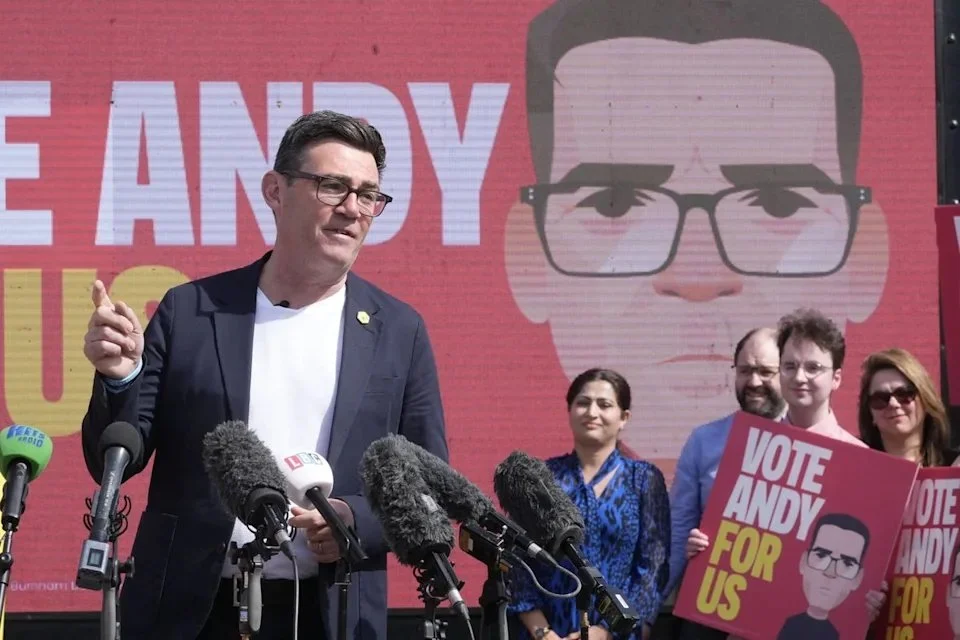
‘Would you have a pint with him?’
It’s the question British politics always seems to come back to. Slightly daft. Entirely unscientific. Yet somehow it tells us something important.
Because nobody chooses a Prime Minister based on who’d be the best company over a Guinness. But they do decide whether someone feels like a person they’d trust, understand or listen to.
Brands work in much the same way.
When a brand loses relevance, the instinct is almost always to communicate harder. Refresh the positioning. Launch a campaign. Add more proof points. Explain yourself better.
Changing the experience
The problem is that people rarely change their minds because you gave them more information.
They change their minds because you gave them a different experience.
That’s why Andy Burnham is such an interesting case study for marketers.
Whether you agree with his politics is irrelevant. This isn’t an article about Labour or the Government. It’s about repositioning. And Burnham is demonstrating something that many brands still struggle to grasp: you don’t reposition a brand by changing what it says. You reposition it by changing what people repeatedly experience.
Look at the last decade of British political leadership. Different policies, different priorities, but remarkably similar branding. Dark suits. Westminster backdrops. Carefully scripted interviews. Lecterns. Press conferences. Politicians talking at the public rather than with them.
Distinctive memory
Burnham has deliberately broken that pattern.
Not through one dramatic gesture, but through the accumulation of dozens of small ones.
The glasses have become recognizable. The T-shirt beneath the jacket has become part of the uniform. He speaks directly to camera. He ditches the lectern. He talks without notes. He announces transport policy from buses rather than briefing rooms. None of these choices matters very much on its own. Together, they create something every marketer is chasing: a distinctive memory.
We spend a lot of time talking about distinctive brand assets. Logos. Colors. Sonic identities. But some of the strongest assets are behavioral. They’re the things a brand consistently does that become unmistakably its own.
Burnham isn’t just building recognition. He’s building expectation.
Natural connection
Then there’s the audience strategy.
One of the easiest mistakes brands make is confusing the loudest audience with the biggest one. Around nine million people live in London. More than 58 million live everywhere else in the UK. Burnham’s communication reflects that reality. Manchester. Regional identity. Football. Music. Pubs. Local transport. These aren’t lifestyle accessories bolted on to a political brand. They’re some of Britain’s biggest shared cultural spaces.
Football alone reaches tens of millions of people. Millions attend live music every year. Around a third of UK adults visit a pub every month. These aren’t niche interests; they’re category entry points into everyday life.
The important point is that Burnham hasn’t invented them.
He’s earned them.
His football references resonate because he’s been an Everton supporter for decades and still holds a season ticket. His connection with music feels natural because Manchester’s music scene has long been part of his identity. That’s the difference between authenticity and opportunism. One is accumulated over years. The other appears in a content calendar six weeks before launch.
Perhaps the smartest part of his communication strategy is that every channel has a clear role.
The BBC interviews build reach and reassurance. They establish competence with the broadest possible audience. Social media does something entirely different. It reveals personality. Humor. Interests. Family. It gives people a sense of who he is, not simply what he believes. Regional media reinforces belonging. Cultural conversations create relevance.
That’s what integrated communications should look like.
Not the same message repeated across every platform, but one positioning expressed differently depending on where people encounter it.
Delivery creates trust
Of course, communication only gets you so far.
If experience fails to match expectation, today’s distinctive behaviors become tomorrow’s evidence of hypocrisy. That’s true whether you’re leading a political party or a hundred-year-old consumer brand. Positioning creates expectation. Delivery creates trust.
But marketers shouldn’t overlook what’s happening here.
For years, we’ve become obsessed with functional benefits, rational proof and reasons to believe. Burnham’s communication suggests something rather older and rather simpler.
People don’t connect with policies first.
They connect with personalities.
The policies may ultimately determine whether he’s remembered as a successful politician. But personality is why people started paying attention in the first place.
And perhaps that’s the real lesson. Brands don’t become more relevant because they explain themselves better. They become more relevant because they behave differently enough for people to feel that they’ve changed. Politics aside, I think he’s just about the only PM I can ever remember who I might just want to go for a pint with.
Let’s talk.
